
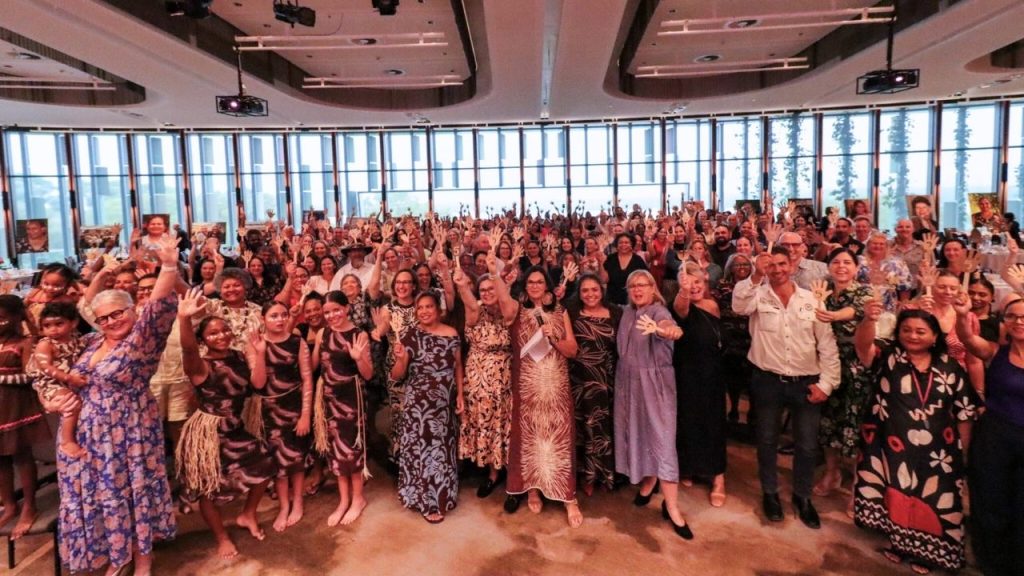
Cape York Partnership’s International Women’s Day Luncheon celebrated the strength of First Nations women and the work underway to balance opportunity.
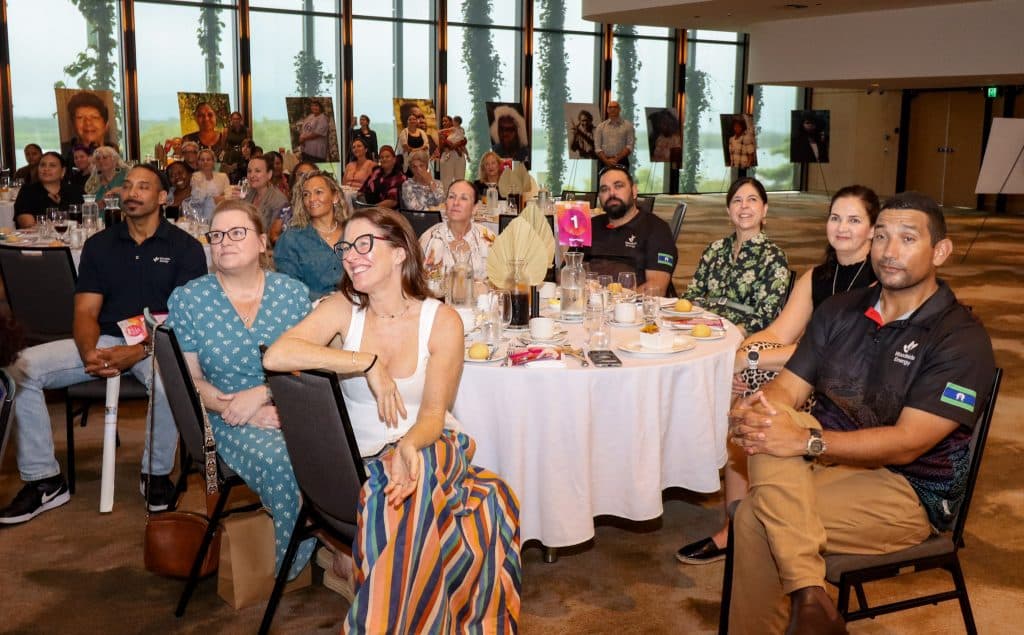
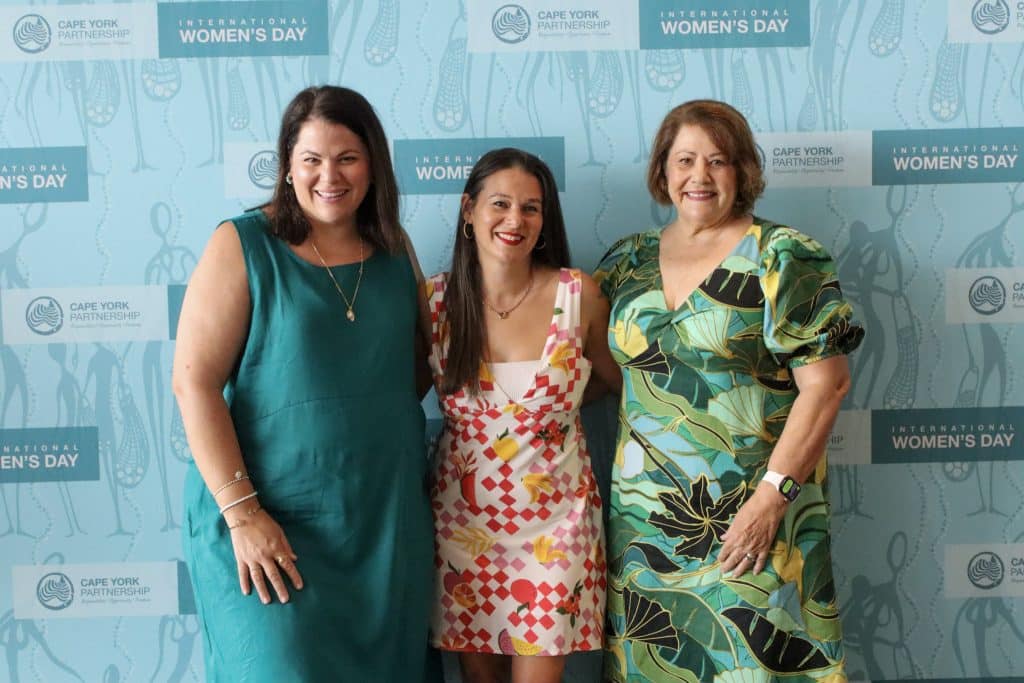
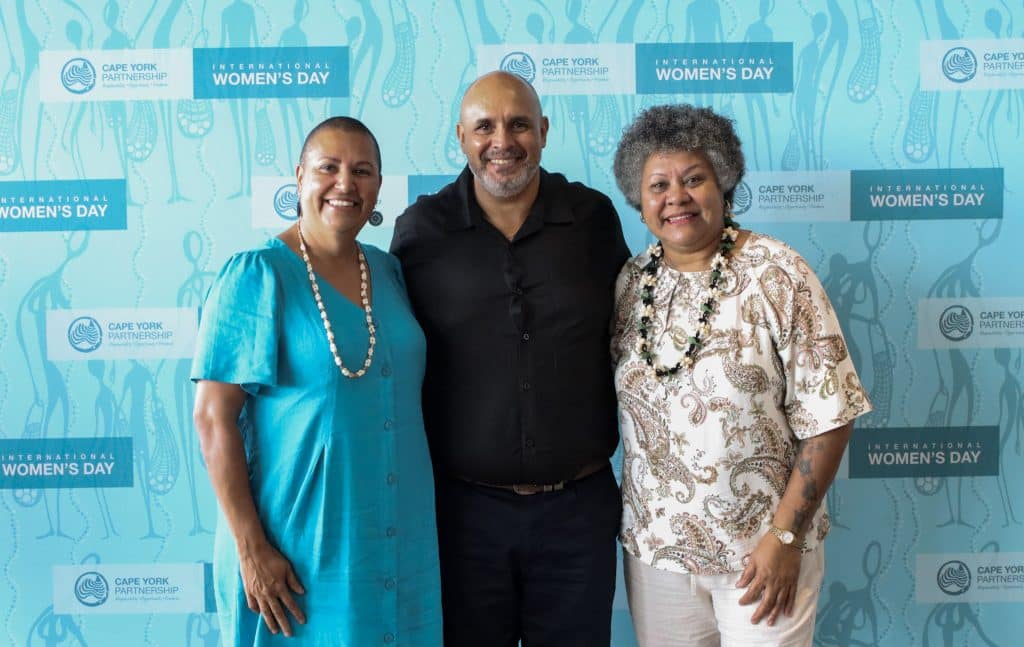
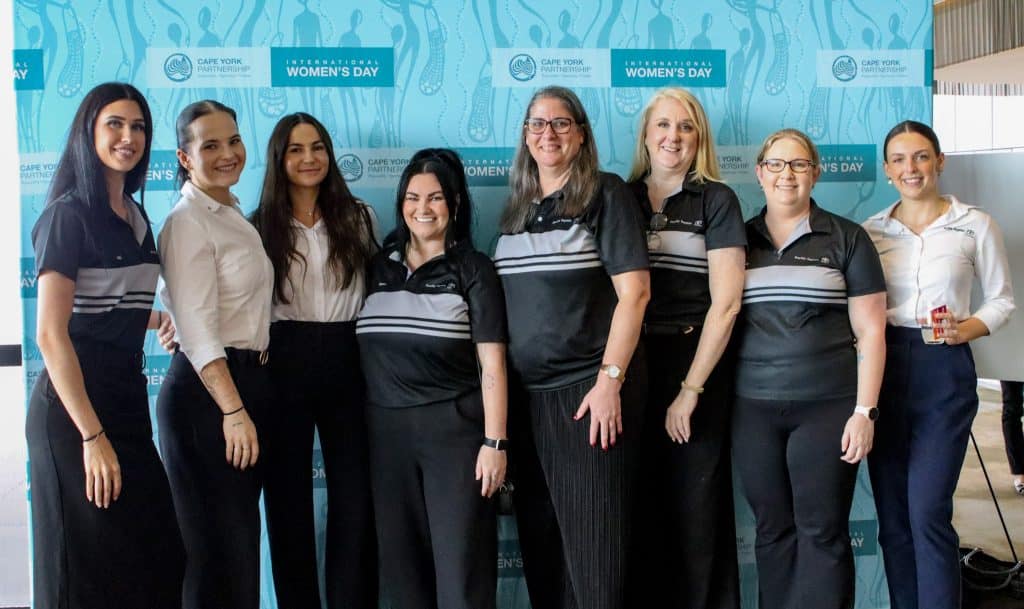
More than 250 community leaders, advocates and supporters gathered at the Cairns Convention Centre for the fifth annual Cape York Partnership International Women’s Day Luncheon, uniting around this year’s theme – Balancing the Scales.
Over the five years, the luncheon has more than doubled in size and has become a cultural highlight on the calendar for many across the Cape York Partnership network and wider community.
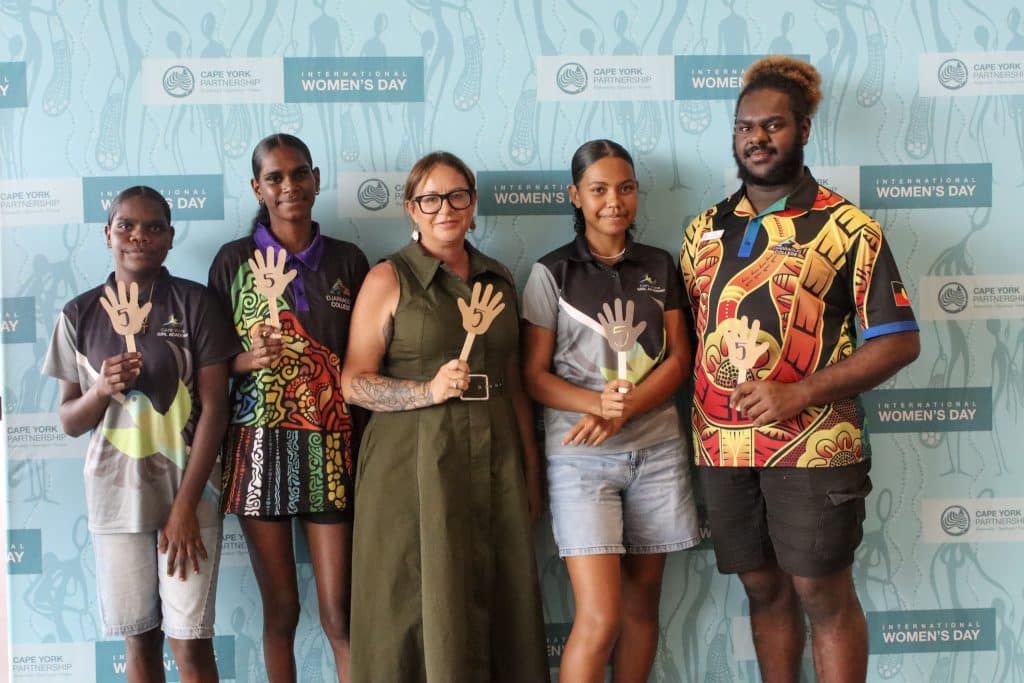
This year, guests were welcomed with live music by Gimuy artist Yirgjhilya, which drew attendees into the Trinity Room after they had the opportunity to view a display from Pama Language Centre and artwork stalls from Djarragun College art students.
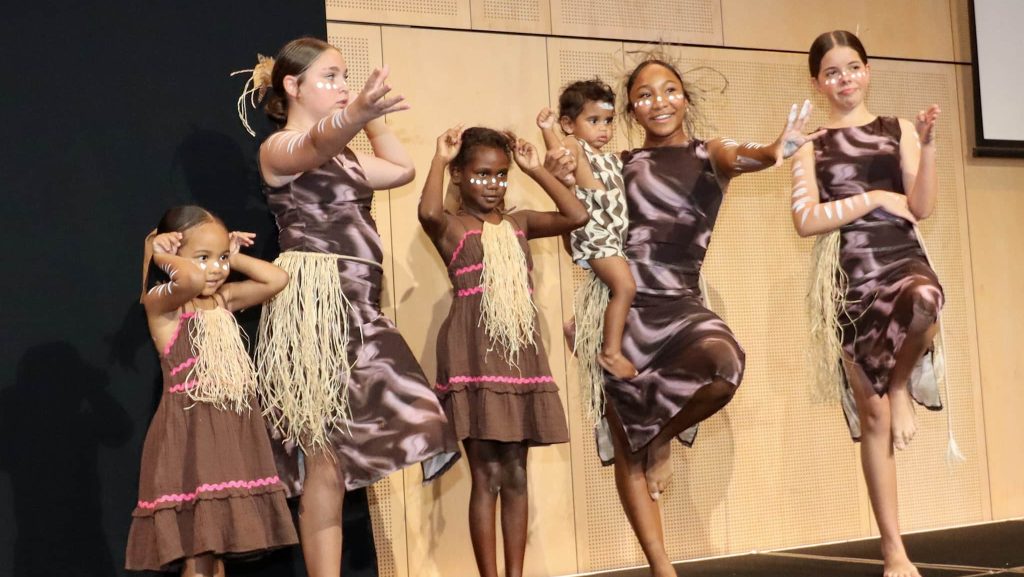
After guests were seated, Gimuy Walubara Yindinji Elder Henry Fourmile delivered the Welcome to Country, followed by an impressive performance by the Sand & Sea dancers.
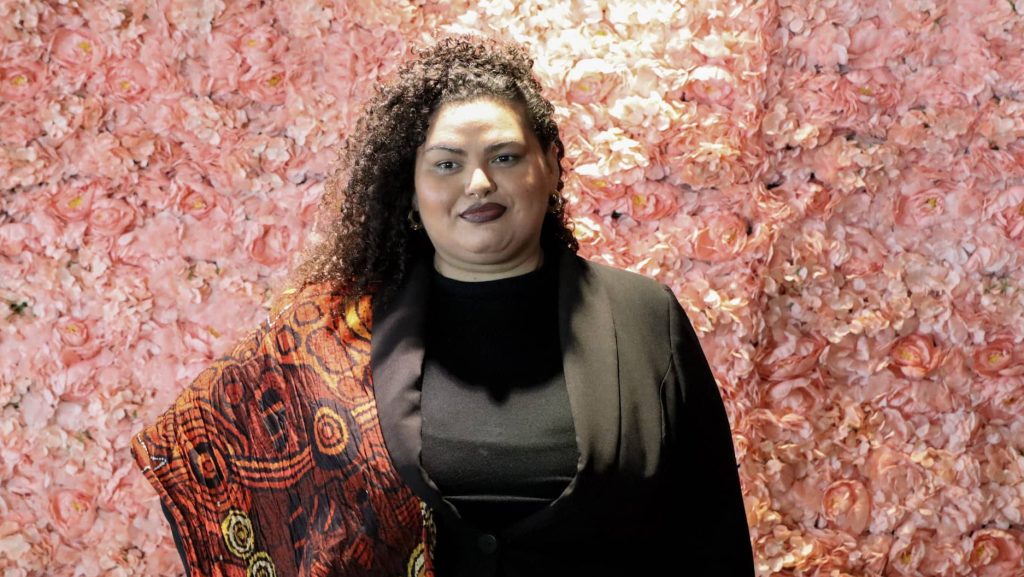
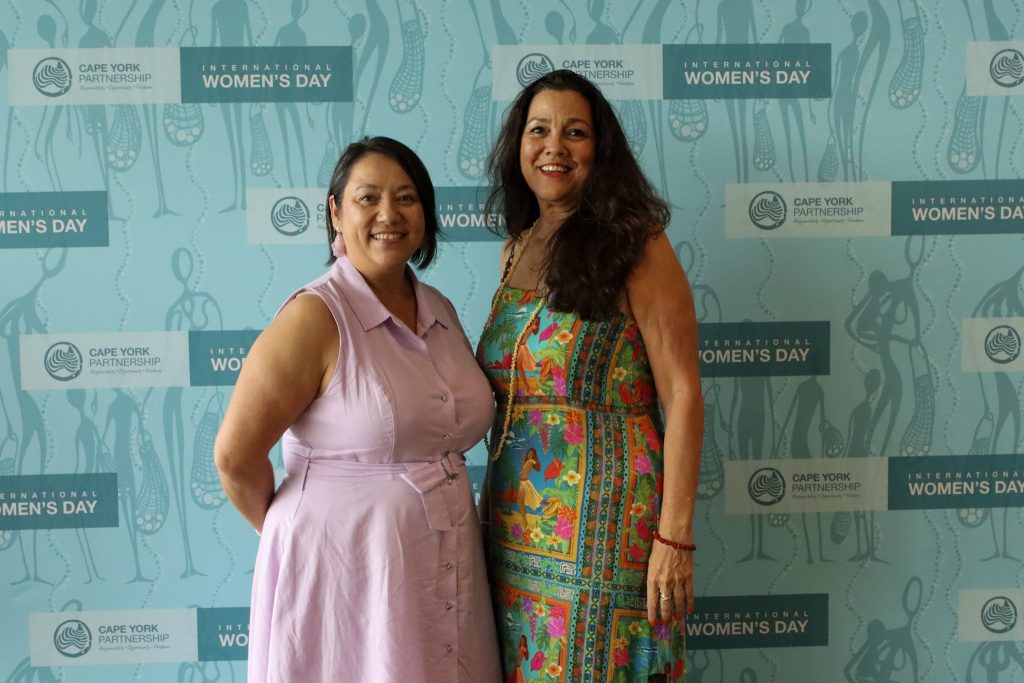
The annual luncheon celebrates the strength and leadership of First Nations women while also highlighting the ongoing social and economic challenges many communities continue to face. Throughout the event, the Balance the Scales theme was reinforced by speakers including Cape York Institute for Policy and Leadership CEO Kirsty Davis and Cape York Partnership Group CEO Fiona Jose, who spoke about responsibility, opportunity and the structural barriers facing many Australians.
Guests were gifted a specialised art block featuring artwork by Talicia Minniecon, co-created with her sister Sharrae Anderson. Titled Growing While Grieving, the piece explores the sacred strength carried by First Nations women. The work reflects resilience, softness and enduring hope – creating beauty and love even while the scales remain unbalanced.

Cape York Institute for Policy and Leadership CEO Kirsty Davis spoke to the strength of Cape York women and how, every day, they “hold many strands at once” as they balance their lives and those of their families.
However, she warned that this balance is increasingly threatened and questioned whether current systems provide the same opportunities available to people in other parts of the country.
“It is about balancing responsibility with real opportunity – supporting people to take responsibility for themselves and their families, and making sure that effort is met with quality, reliable opportunity from the systems around them,” she said.
“Until we back early childhood education, quality schools, affordable food, real work and the basic life chances other Australians take for granted, a strong social fabric will always be hard to achieve.”

Kirsty then introduced a short video (below) celebrating the tradition of weaving and yarning among women across Cape York communities. The video featured women from Lockhart River, Mossman Gorge and Hope Vale, highlighting how weaving circles create spaces for cultural practice, leadership and shared problem-solving.
After the screening, the audience saw the result of the weaving activity, as individual pieces created by women across the communities were brought together to form a larger woven artwork. The finished piece will be housed at the Baninh Yeeum Building (Cape York Partnership Cairns office), as a symbol of many hands and voices coming together to strengthen the social fabric of communities.
Cape York Partnership Group CEO Fiona Jose spoke about the stark gap between Australia’s “fair go” ideal and the reality faced by the nation’s Bottom Million.
“We could spend our time celebrating how far women have climbed – more women on boards, more women in Parliament, more women in corner offices,” she said. “But I want to talk about the women and children who are still standing on the ground floor of this country, looking up at a ladder that was never built for them.
“I want to talk about Australia’s Bottom Million – because that is where the true state of our humanity is revealed, and where the scales are most brutally out of balance.”
The Bottom Million – around five per cent of Australians – are defined by class rather than race, culture or geography, though First Nations people are significantly overrepresented.
“Our people live in communities where there are no real labour markets, where schools are failing children and where public housing is a cul-de-sac, not a stepping stone,” Fiona said.
Drawing on the event’s theme, Fiona said the imbalance facing many communities was not accidental.
“This isn’t random misfortune. It is structural design,” she said. “In some parts of Australia, a child can reasonably assume that if they work hard, school will lead to further study or a decent job, and that job will lead to security.
“In other parts of this same country, children grow up knowing – long before they can find the words for it – that school does not lead to work, that work does not lead to stability, and that a good future is something that happens somewhere else.”

Fiona said the imbalance is not inevitable, pointing to evidence from Cape York Partnership programs showing that when responsibility is matched with real opportunity, the gap can close within a generation. Through initiatives such as the Cape York Leaders Program, students from remote communities who would otherwise face less than a five per cent chance of finishing school are now completing Year 12 at a rate of around 94 per cent. Programs like the Student Education Trusts have also seen families collectively save more than $6 million of their own money to support their children’s education – demonstrating both the determination of families and the impact of structured opportunity.
“These results show that when systems are designed to meet responsibility with opportunity, young people thrive,” she said.
The fifth annual International Women’s Day Luncheon highlighted the resilience, leadership and determination of First Nations women and those working alongside them, as communities continue striving to balance the scales of opportunity across Australia.




MAKE AN IMPACT
Your support will empower Indigenous Australians in Cape York and beyond to create positive change in their communities. Every donation, large or small, can create a ripple of change that will span generations.