
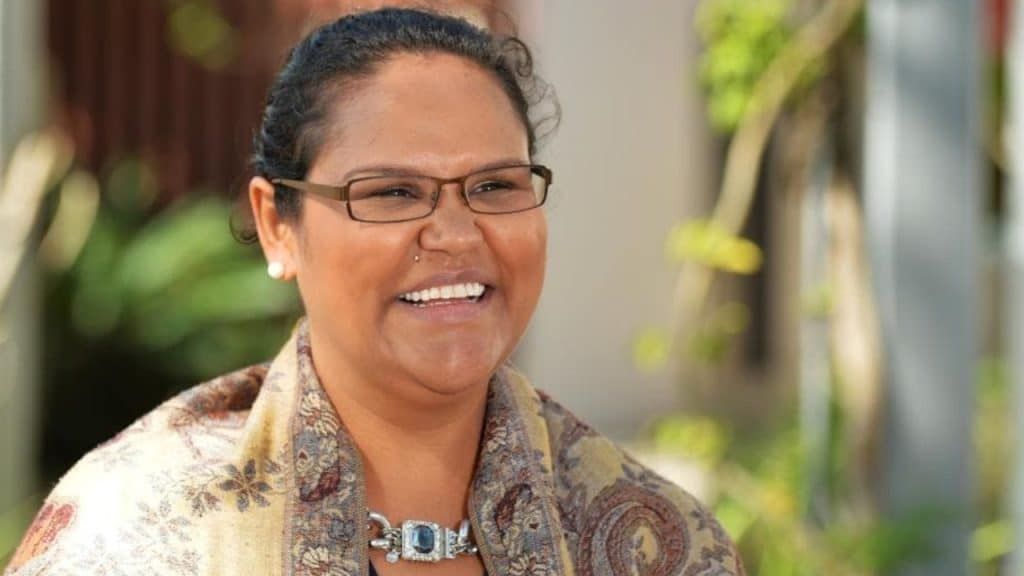
By Tania Major
Fate dealt me an extraordinary opportunity — one that changed the trajectory of my life and, I hope, the lives of many who came after me. I was fourteen, a girl from Kowanyama, standing on the edge of a system that was already failing most of my peers. Only one in a hundred Cape York students who remain in local state schools ever finish Year 12. That’s not failure by our children — it’s the consequence of a broken system that denies them the structure, support, and seriousness they deserve.
For reasons that still humble me, opportunity intervened. My mother, Priscilla, was holding bake sales to fund my schooling — baking cakes so her daughter could have a life different to hers. When Noel Pearson heard about her, he said something I will never forget: “Priscilla was able to give her daughter everything, except money to cover the college fees. That part was my contribution, and it was a small part of the success. The big part was the love of the mother for her daughter.”
As a very early lawyer he paid my school fees himself. Any extra work he’d have payment sent to Clayfield ‘for the Kowanyama girls’. After me followed another ‘Kowie’ girl who became a nurse. That act of faith in us became the seed of something much bigger — the Cape York Leaders Program (CYLP).
Noel has often said there is “no more powerful driver of progress than the tender regard a mother has for her own,” and that “the mother whose jealous regard for the prospects of her children is the most powerful engine of social progress.” That is indeed my mother — the perfect embodiment of those words. A woman whose fierce love and unrelenting hope built a bridge for her child into another world. She didn’t have wealth, influence, or access — but she had belief, and could cook.
Noel saw in her the very blueprint for reform: love backed by structure. He has always said education is not an optional extra, but the foundation of freedom. CYLP was born from that conviction, that we cannot keep asking children to lift themselves out of structural failure without first building a structure that can hold them.
When I left home for Clayfield College in Brisbane, I carried the weight of expectation in my suitcase. I knew the eyes of my community were on me. I understood from the beginning that this opportunity wasn’t mine alone.
After graduating, I studied Criminology and Criminal Justice at Griffith University. Education gave me a language for justice — it gave me the tools to turn outrage into design. I later completed a Master of Public Policy because I wanted to help shape the systems that shape us.
While I was studying, I worked as a boarding mistress at Clayfield, mentoring the first official cohort of CYLP students. I saw myself in those kids — the homesickness, the culture shock, the sheer determination. Those early years taught me what works, high expectations, rigorous academic support, cultural grounding, and the unshakeable presence of people who believe in you.

Not long after, Noel invited me to join the newly formed Cape York Institute to head the Youth Talent Development team. It was there that we designed the model that would change everything — the architecture that allowed young people from remote places, where schooling was failing them, to attend high-performing schools in more advantaged settings.
We developed the concept of orbiting mobility. Young people moving between community and opportunity, always tethered to culture as gravity. It was a structural expression of what our people have always known — that mobility need not mean disconnection. The Commonwealth later adopted that model nationally as the Indigenous Youth Mobility Program.
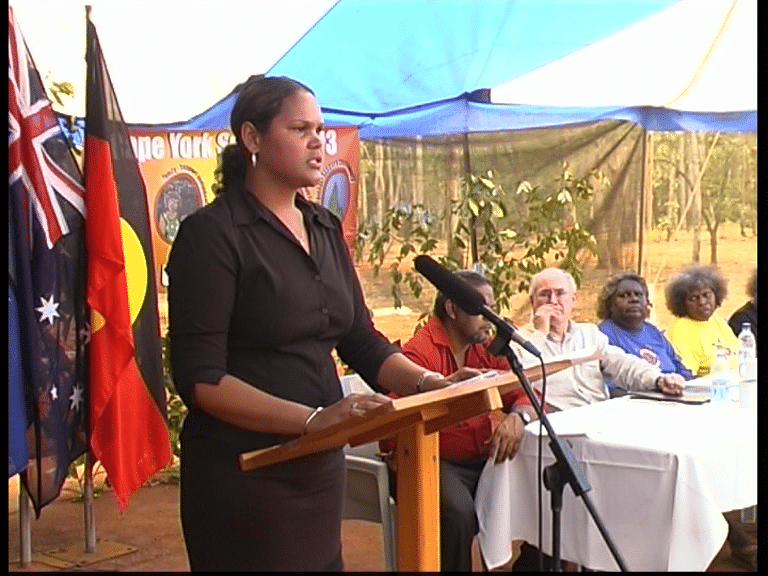
In 2003, I stood at the Cape York Summit in Aurukun in front of Prime Minister John Howard and the nation’s most powerful decision-makers. I was in my early twenties, nervous but certain that the truth had to be spoken.
I told him, “Here I am, the only person from my Year 12 class to graduate. Four of my classmates have taken their own lives.”
The silence that followed said everything. I wasn’t telling a story to evoke sympathy, I was showing the human cost of a failing education system. I wanted him — and everyone in that room — to understand that what we were talking about wasn’t something he could walk away from, it was life and death.
That moment still burns in me. It confirmed what I already knew — no amount of luck or sympathy will shift the dial. Only policy and system reform change lives.
To be “the first” is to live under the weight of proof. Opportunity opened a door for me, but my responsibility was to make sure that door stayed open for others.
Noel taught me the principle of giving forward — that when you are given a chance, you honour it by creating opportunity for others. That’s become the rhythm of my life. Whether as a mother, an artist, an entrepreneur, or an advocate, I give forward. My life is full — but when chances arise to use my voice, I take them. Because when you’ve been handed an opportunity like mine, you don’t waste it.
Twenty years on, the Cape York Leaders Program stands as living proof that structural reform can close the gap within a single generation. More than 600 young people from remote and very remote communities have been supported, hundreds have achieved Year 12 success with a Queensland Certificate of Education. Of those who reach Year 12, 94 per cent graduate., that’s almost double the national average for remote Indigenous year 12 completion. Seventy percent of the Program graduates go straight into work or further study, and they go on to earn $50,000 more than their friends and cousins who disengage. They are closing the gap on education, employment, income and health.
The data tells one story, but the human story is richer. Those kids once trapped at the bottom are now dentists, teachers, artists, nurses, business owners, and community leaders. They are proof that capability is universal , it is structure that determines opportunity.
It’s not just about sending students to good schools — the Program catches them up, wraps them in mentoring, keeps them grounded in culture, and connects their families to the tools of responsibility and aspiration. About 65 per cent of CYLP parents now save into Education Trusts for their children’s schooling. That is the quiet revolution — families once excluded from opportunity now co-investing in it.
And yet, every year, hundreds of capable Cape kids are left behind. Around 340 students enter Year 7, only up to twenty can be offered CYLP placements. The rest remain in failing systems because governments continue to throw money in every direction — the “spray and pray” approach — instead of scaling what works.
We need structural investment in proven opportunity at scale. Treat them as the backbone of remote education policy, not as a boutique project for the lucky few.
I do not know how more plainly I can say this - lock in equity. Quality secondary education for remote Indigenous students must be a right, not a privilege. If excellence exists elsewhere, support ‘orbiting’.
It is the expectation of every parent – that when they send their kids to school that literacy is the destiny. Remote primary schools must deliver reading and numeracy to national standard, every child, every classroom, every day.
Please back our families. When our families get their children to school each day, save their limited income into Education Trusts, the state must do its own part and make the learning happen.
The success of CYLP is in its design, on the hard edge of expectation, responsibility, and cultural authority. It shows that when parental love is met with institutional seriousness, the gap can close.
I think often about my mother, now a grandmother. The woman who cooked and baked her way into reform history. Noel once said, “It began with a mother’s love.” He was right. Her “jealous regard” for her children’s prospects was the engine of our family’s progress. And across Cape York, I see that same jealous regard — mothers who refuse to surrender their children to broken systems, who still believe, as mine did, that their children are destined for more.
To policymakers: stop funding failure. Fund what works.
To parents: keep packing the bags, keep saving into those Education Trusts, keep believing your children deserve the best.
And to the young ones: you belong in every room where decisions are made. Walk in two worlds — strong in culture, strong in knowledge. And when you cross that stage in Year 12, turn back and hold the door open for the next kid with a suitcase and a dream.
Fate changed my life. I won’t waste it.
And I will spend the rest of my life making sure no child ever has to rely on chance again.
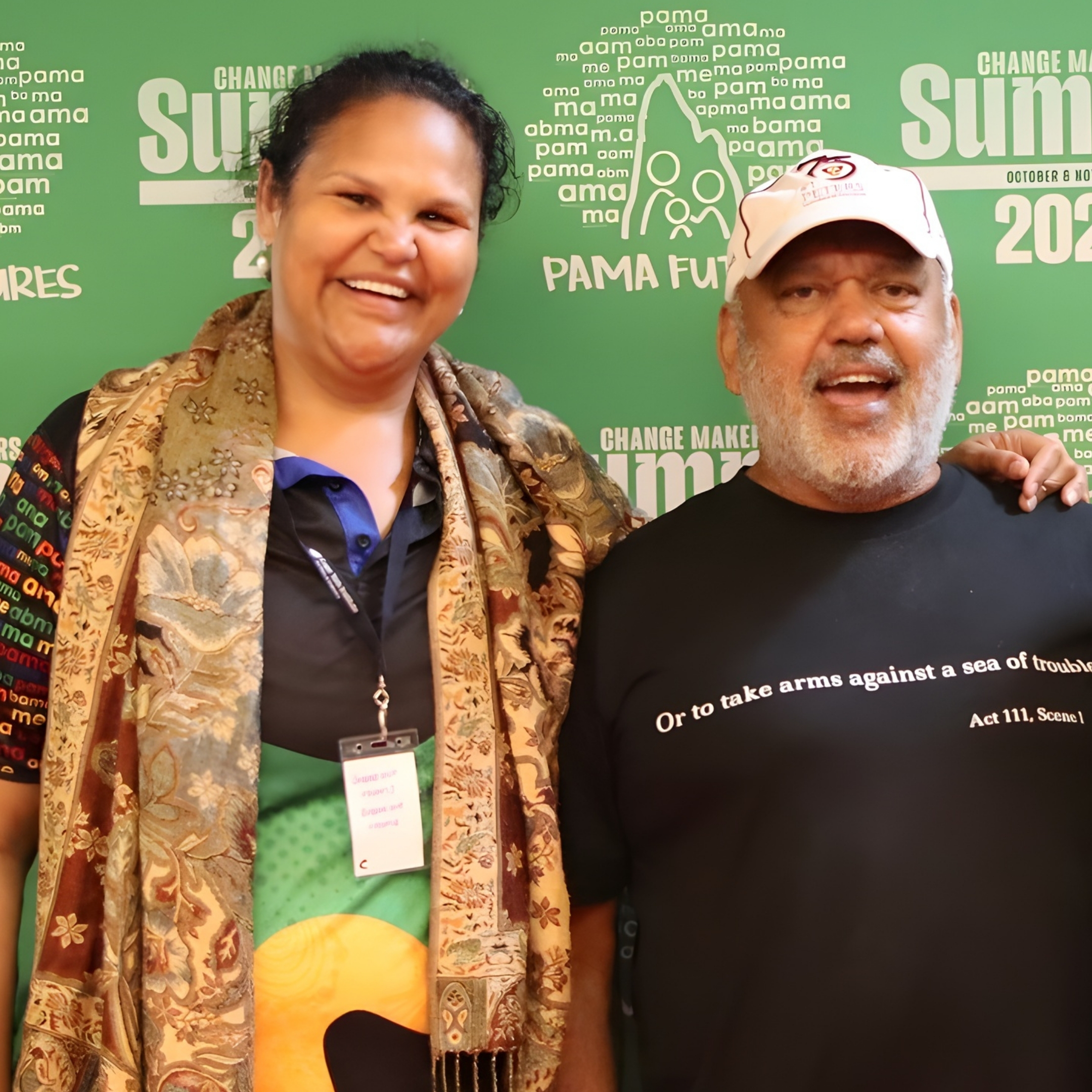
Author note:
Tania Major is a Kowanyama-born artist, entrepreneur, and human rights advocate. She was the first student supported by Noel Pearson’s vision that became the Cape York Leaders Program, co-designed its model, and went on to become the youngest person ever elected to the Aboriginal and Torres Strait Islander Commission. In 2007, she was named Young Australian of the Year.
MAKE AN IMPACT
Your support will empower Indigenous Australians in Cape York and beyond to create positive change in their communities. Every donation, large or small, can create a ripple of change that will span generations.