First published in The Australian on 4 November 2026.
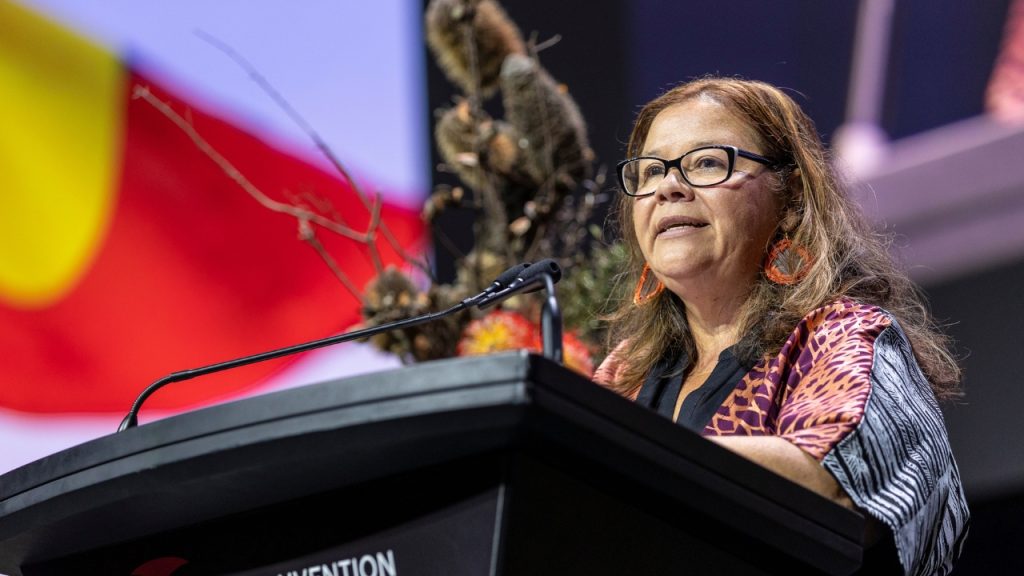
By Fiona Jose, Executive Co-Chair, Cape York Partnership
Fewer than 400 Indigenous children will be born in Cape York this year. After 18 years of Closing the Gap, there is no evidence to assure their families that these children will have better life chances than those born when the national effort began in 2008.
Australia has become a nation that reviews endlessly and reforms reluctantly. In Cape York, people call it ‘death by a thousand consultations’.
This is not mere hyperbole. Deaths of despair are common in Cape York, where funerals are frequent and lives are cut tragically short. The median age of death for Indigenous Australians is 30 years younger than for residents of Brisbane. In remote North and Far North Queensland, the median age of death is 53 years in Kowanyama and 54 years in Aurukun and Mornington Island.
This week, Cape York Institute for Policy and Leadership made another submission to the Productivity Commission's review of Closing the Gap. We made a substantial submission in 2023, arguing that Closing the Gap lacked the most basic requirement of serious reform: a credible theory of how disadvantage is overcome.
Drawing on decades of reform work in Cape York, we proposed a developmental approach that joins personal responsibility with genuine opportunity, restoring the connection between effort and advancement through effective education, work and pathways to ownership. Governments must be accountable not merely for the services they deliver, but for whether the opportunities necessary for people to advance are actually available.
It is difficult not to conclude that we wasted our time. When it comes to the fundamental issues, nothing has changed.
The problem is not that Australia lacks the resources, knowledge or institutions to change these children's futures. It is that we have failed to organise them around the development of people.
Closing the Gap fails in its ambition for Australian children. It is not beyond us to end the inheritance of entrenched disadvantage within a generation. Yet Closing the Gap could succeed on its own terms, while profound inequalities in children's life chances persist for generations.
Consider adult imprisonment. In reality, imprisonment rates are moving in the wrong direction. But even if Closing the Gap achieved its target of a 15 per cent reduction and repeated that achievement every 12 years, it would take almost 200 years to reach the current non-Indigenous rate. Eight generations of Indigenous families would pass before we could expect parity for our children. Australia has accepted the unacceptable.
Development requires hope enough to strive. Families must have a reasonable expectation that effort can produce a better life. A national framework that does not seek to end the transmission of disadvantage to the next generation cannot provide that hope.
Closing the Gap fails in its diagnosis and design. It assumes entrenched disadvantage can be overcome by improving the delivery and coordination of income support, services and programs.
Almost 30 years ago, Noel Pearson identified the fundamental problem from Cape York's experience. He called it passive welfare. The Productivity Commission's own work since has confirmed the limitations of income support and services in overcoming persistent disadvantage.
The system generates activity and expenditure, but too little advancement. The federal government has committed $1.9 billion to remote employment services, yet reported outcomes indicate that 96 out of every 100 participants fail to achieve even six months of employment. No service can conjure jobs where they do not exist.
Social assistance is necessary, but it is not a theory of development. Australia has built an elaborate industry that feeds on entrenched disadvantage, rather than the institutions needed to overcome it.
Human development is cumulative and sequential. At each stage of life, capabilities must be acquired and opportunities available for effort to produce advancement. Healthy brain development lays the foundations for school readiness, literacy and numeracy, secondary completion, and the transition to work and further learning. From there, young adults need opportunities to build assets and create a better inheritance for the next generation.
When these foundations are not laid, disadvantage compounds. A child who cannot read struggles with everything that follows. A young person who leaves school without the capabilities needed for work faces diminished prospects for independence and prosperity. This is the Matthew Effect—the tendency for advantage and disadvantage to accumulate—a tale as old as the Bible.
Australia understands how disadvantage compounds. What is astonishing is that we have not organised our institutions to ensure that capability accumulates instead.
After decades of failure, it is neither compassionate nor economically viable to continue doing more of the same.
Australia is failing to exercise the reform muscle needed to change children's futures. The Productivity Commission bears some responsibility.
The Commission examines how Australia can produce more, earn more and become more prosperous. Yet its Closing the Gap work documents, year after year, children falling behind at school, adults without work, families without homes and lives cut short.
The two intellectual programs have barely met.
The development of people and the development of the economy are inseparable. For an institution charged with advancing Australia's productivity, failing to make this connection central is a striking omission, particularly when Australia is searching for new sources of growth.
Although Closing the Gap applies specifically to Indigenous Australians, these failures are not confined to Indigenous Australia. Across the country, Australians experiencing entrenched, inherited disadvantage face the same broken connections between effort and advancement. They are part of what Cape York Institute calls Australia's Bottom Million.
Their predicament is central to Australia's productivity challenge. A nation that leaves a million of its people without genuine opportunities to advance is squandering human potential and diminishing its own economic future.
The Productivity Commission should put its economic expertise to work on this problem. It should help develop and test a new approach to overcoming entrenched disadvantage—one that joins personal responsibility with genuine opportunity, makes institutions accountable for closing the Opportunity Gap, and places the development of people at the centre of economic reform.
This is the opportunity presented by the current review. Not another accounting of failure, but an examination of what it would take to overcome it.
Australia does not need another 18 years of documenting the gaps. It needs a national development agenda capable of closing them. Will the Productivity Commission help Australia build one?
FOR THE LOVE OF OUR CHILDREN
Please consider making a tax-deductible donation to Cape York Partnership before 30 June. Your donation will create real opportunities for First Nations families to take responsibility and build a stronger future.