Below is an op-ed by Cape York Institute for Policy and Leadership CEO Kirsty Davis on CYIPL's recent submissions to the Child Safety Inquiry
When the Child Safety Commission of Inquiry concluded its final hearings, Commissioner Paul Anastassiou KC put the spotlight on the Cape York Institute’s warning that thirty years of repetitive government talk has caused a gridlock of "death by a 1,000 consultations" - an endless cycle of bureaucracy that severely ruins vulnerable children's lives. The Commissioner’s historic acknowledgment highlights a damning structural reality: "Queensland has become a serial inquirer while remaining a reluctant reformer”. For three decades, from the Forde Inquiry to the Carmody Royal Commission, the state has repeated a predictable loop of high-profile exposé followed by superficial administrative resets, routinely burying the structural lessons of past failures while the crisis at the front end continues to escalate.
Our submission aims to shift the debate away from the endless cycle of inquiries and puts the focus squarely on structural reform. We have had inquiry after inquiry, report after report, and consultation after consultation. Meanwhile, the state substitutes endless meetings for decisive action, while children continue to experience neglect, violence, chronic truancy and developmental harm.
The Cape York Institute's position stands in contrast to the misdiagnosis that has dominated and crippled government policy for decades. The state's current framework is governed by what we call ‘symptom theory’ - the flawed and prevailing idea that "addiction and violence are merely symptoms of deeper historical and social problems, and that we must first fix poverty, dispossession and trauma before we can expect behaviour to change”. This misdiagnosis means the current policy environment funds the symptoms rather than fixing the root cause.
The system has lowered the bar. By treating household chaos, chronic truancy, and addiction as an unavoidable, permanent landscape, the state chooses to flood communities with fly-in, fly-out (FIFO) and drive-in, drive-out (DIDO) services that offer voluntary uptake at the margins. This approach strips away parental expectations, replacing active responsibility with an ongoing state-funded intervention industry. Instead of demanding that adults step up, the system waits for a family to totally collapse into chaos, and then steps in "too much, too suddenly, too late" with the most brutal tool it has - removing the children.
Queensland has built a permanent, multi-billion-dollar downstream industry around Indigenous childhood and Indigenous misery. The state willingly spends up to $1,360 per child, per night - amounting to over $1.1 billion a year - to warehouse children in residential care homes that compound trauma instead of healing it. Yet, national data shows that "barely 16 cents in every dollar is invested in keeping families together and children safely at home”. No amount of visiting counsellors can fix this structural failure. The proximate cause of this crisis is not a lack of programs or funding, it is a policy environment that tolerates dysfunction by funding the symptoms. True early intervention means shifting the entire pipeline upstream to support, encourage, and require parents to take responsibility for their own children.
Our insights come from decades of proximity to remote communities. Responsibility without opportunity leads to despair. Opportunity without responsibility leads to passivity. Bring them together, and parents build the actual capability to change their home environments.
The Core Diagnosis: Passive Welfare and the Alcohol Epidemic
We must be completely uncompromising in our diagnosis: grog, cannabis, and ice are not secondary risk factors, nor are they merely the unfortunate symptoms of disadvantage. They operate as "psychosocially contagious epidemics, recruiting one generation after another into addiction and violence”. They are the primary, proximate drivers of the family violence, physical abuse, and neglect that fill child safety files.
The deeper fuel for these epidemics is a "passive-welfare environment" that has hollowed out work, individual responsibility, and social norms. Unconditional welfare payments, divorced from any behavioural expectations, have created what one Cape York grandmother famously called the "welfare pedestal", an artificial economy where money comes "for nothing" and can be spent without principle. When adult attention and thin household resources are captured by grog and gambling, money that should buy food, uniforms, rent, and electricity, is systematically drained away into losses. As our submission strongly highlights: "The perceived right to drink cannot continue to trump the right of Indigenous children to safety, sleep, food, education and mental health."
Reclaiming Local Authority: The FRC Holds Parents Accountable
At the centre of our preventative architecture is the Family Responsibilities Commission (FRC), an Indigenous designed and led early child protection mechanism, for adult accountability.
The FRC does what a distant bureaucracy in Brisbane can never do. It restores personal responsibility by putting a panel of respected community Elders and local leaders on the frontline when a child protection concern, chronic school absence, or police notification is triggered. Parents are required to attend a conference, sitting face-to-face with local leaders who wield cultural weight and moral authority, backed by legislative powers.
The FRC's core principle is that parents cannot be permitted to stand aside from their own obligations while the system raises their children. The local panel directly confronts parents about their conduct. They set up binding legal agreements that mandate help, such as intensive parenting coaching or drug and alcohol rehabilitation. But if parents refuse to cooperate, the FRC panels use their statutory powers to manage their welfare income, ensuring money is automatically quarantined for food, rent, and children's essentials first. It breaks the passive welfare cycle by creating structured pressure to ensure parents fulfill their obligations while actively building their capabilities.
Facing the Real Triggers: School, Alcohol, and Gambling
To make this upstream shift a reality, we must use highly visible, front-end levers to disrupt household chaos long before it hardens into a statutory child safety notification. This begins with an honest, public reassessment of what an early child protection trigger actually looks like. In communities where chronic non-attendance is one of the clearest early signs of parental dysfunction, neglect, or household disorder, improved school attendance can no longer be pushed aside as a mere education outcome. It is, fundamentally, an early child-protection outcome.
When a child is missing from the classroom day after day, they are functionally disconnected from teachers and other mandated reporters. The Family Responsibilities Commission (FRC) actively uses these unexplained school absences as a structural trigger to compel parents to sit down with local leaders and accept support before abuse or neglect can entrench.
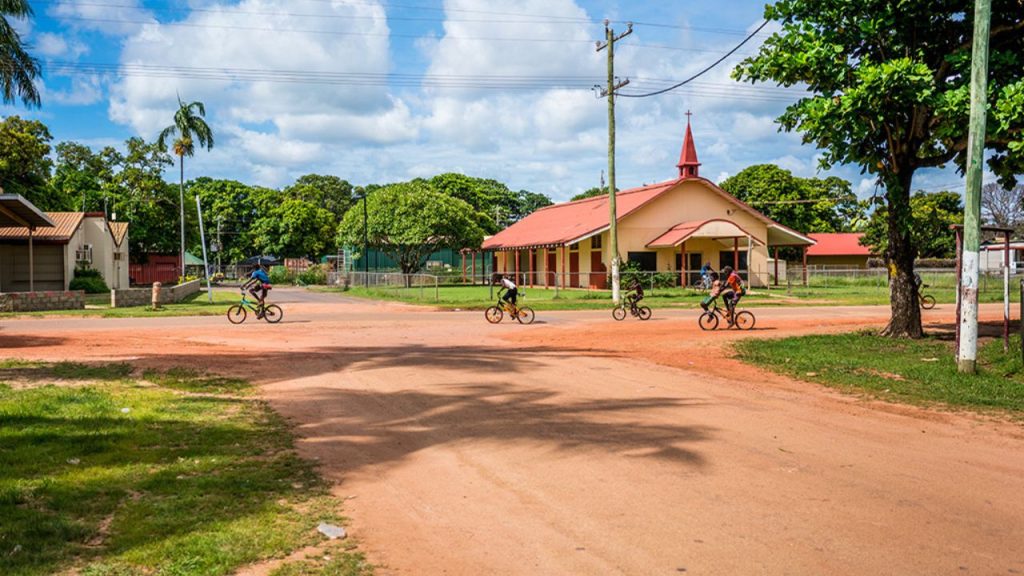
Moving upstream also means recognising that, in discrete remote communities like Aurukun, alcohol policy is child protection policy. The substance abuse epidemics of grog, cannabis, and ice write severe disadvantage directly into children's neurodevelopment. When communities are torn apart by alcohol-fuelled disorder, children carry the ultimate cost in the form of violence, neglect, and completely unsafe homes. Queensland must hold the line on supply-reduction Alcohol Management Plans (AMPs) rather than succumbing to political pressure to loosen restrictions.
Alongside alcohol, predatory gambling operates as a secondary drain that systematically bleeds vulnerable households dry through online betting algorithms and WhatsApp networking strategies. This financial deprivation leaves homes hyper-volatile and children hungry, serving as an immediate upstream trigger for household collapse.
The Path Forward
We urged the Commission to reject the orthodox path of creating more fragmented, voluntary coordination programs that treat symptoms while tolerating epidemics at the centre of children's lives.
Instead, the Cape York Institute called for a legislated structural paradigm shift: a Personal Responsibility and Opportunity Act. This framework would permanently tie income support, housing, and schooling to clear behavioural expectations for parents. In return, the government must legally guarantee the structural opportunities parents need to succeed, including real, minimum-wage jobs on-Country and intensive, "in-community, on-Country residential care options where parents and children can live together for defined periods in a structured, supportive environment."
Under this model, parents won't have their kids ripped away to be raised by the state. Instead, parents and children will live together in a safe, structured, in-community environment. Parents will be given the intensive, hands-on parenting coaching and
substance-abuse treatment they need to step up, sober up, and build the capabilities to raise their own families.
The state cannot continue to dispatch child safety officers downstream to pick up the broken pieces of a failed environment. Queensland must choose the harder path of structural reform. We must enforce responsibilities, guarantee opportunities, and finally give our children the safe, capable futures they deserve.
FOR THE LOVE OF OUR CHILDREN
Please consider making a tax-deductible donation to Cape York Partnership before 30 June. Your donation will create real opportunities for First Nations families to take responsibility and build a stronger future.